
Bamboo vs Plastic Toothbrushes: Why Should I Swap?
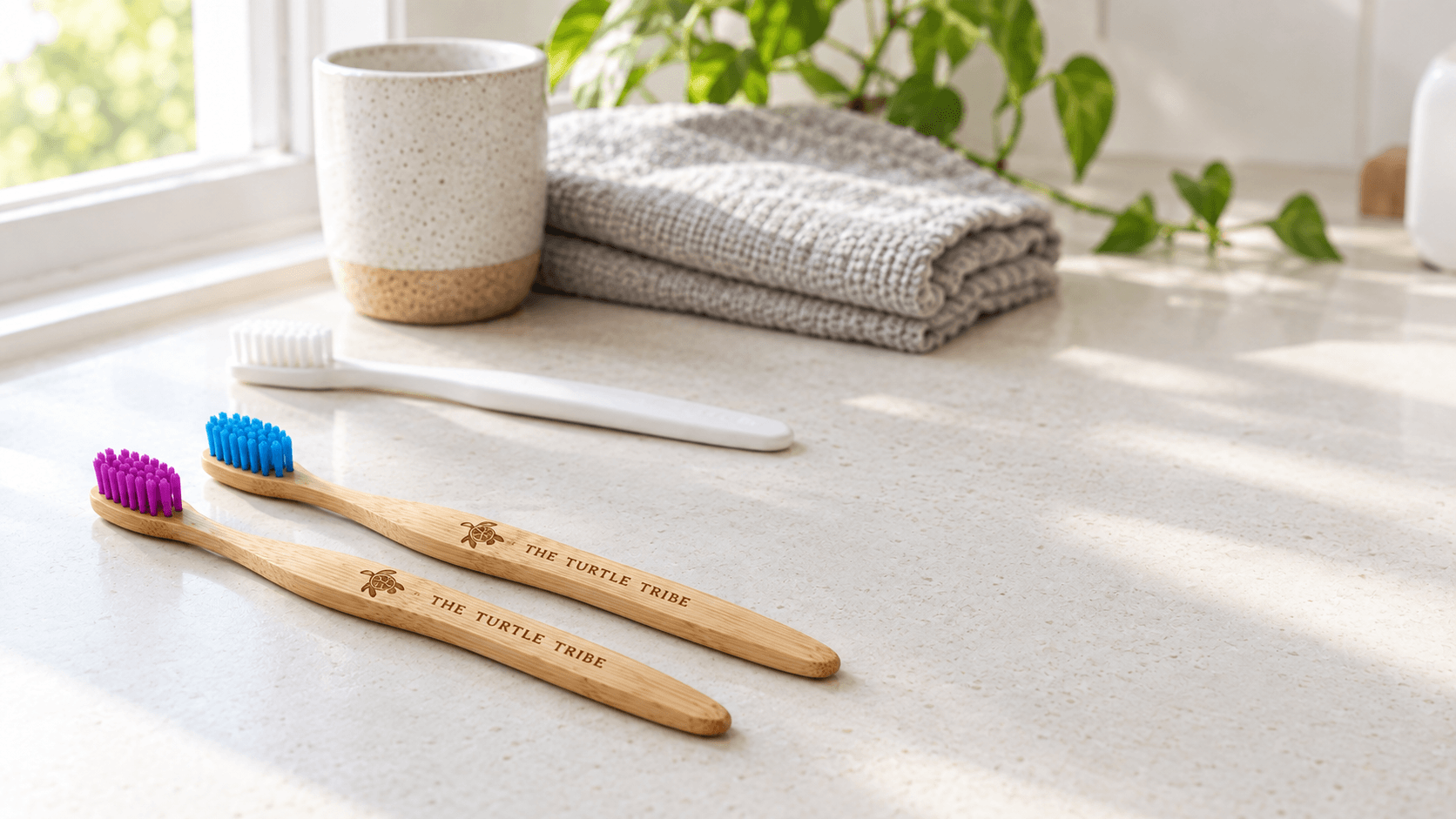
Quick answerIf you're already using a plastic toothbrush, switching to bamboo is a pretty easy way to reduce the amount of plastic you use without changing how you brush your teeth. A good bamboo toothbrush can clean just as effectively as a conventional plastic one. The biggest difference is the handle: instead of throwing away a solid piece of plastic every few months, you're using a renewable plant material that can biodegrade under suitable conditions.
Does a bamboo toothbrush clean as well as a plastic one?
Yes. The handle material has very little to do with how well a toothbrush cleans your teeth. What matters much more is the bristles, the shape of the head, your brushing technique, how often you brush and how long you brush for.
A comparative study published in Medical Science Monitor looked at bamboo, conventional plastic and miswak toothbrushes over eight weeks and found that all three reduced plaque. The study was small, so I wouldn't make too much of it, but it supports the fairly obvious point that changing the handle from plastic to bamboo doesn't mean giving up cleaning performance.
That fits with mainstream dental advice as well. The Australian Dental Association and American Dental Association focus on using an appropriate toothbrush, brushing twice a day, good technique and regular replacement. They don't suggest that a plastic handle cleans teeth better than a bamboo one.
For us, that matters. There's not much point making a toothbrush more environmentally responsible if it's not still a good toothbrush.
Our bamboo brushes are designed with the same practical things in mind as any good manual toothbrush: a comfortable handle, a smaller angled head, tapered bristles and different firmness and colour options depending on the model. Those are the things that make a difference to the brushing experience.
Why swap from plastic to bamboo?
The simplest reason is that a toothbrush handle doesn't really need to be made from plastic.
Most of us should be replacing a toothbrush around four times a year. Over a lifetime that adds up to a lot of plastic handles, all made from a material designed to last far longer than the few months we actually use them for.
Bamboo replaces that large plastic component with a fast-growing renewable material. Under ideal conditions, bamboo can grow close to a metre in a day, which is one reason it's such a good alternative to plastic for something as short-lived as a toothbrush handle.
What does the research say about environmental impact?
A 2020 study published in the British Dental Journal compared the environmental impacts of different toothbrush types over five years. It looked at 16 separate categories, including climate change, resource use, water use and land use, rather than just what happened to the toothbrush after it was thrown away.
The bamboo manual toothbrush had a substantially lower overall environmental impact than the conventional plastic manual toothbrush. Over the five-year period modelled in the study, the bamboo toothbrush used 97% less plastic than the conventional plastic manual toothbrush.
That's the part I think is useful for consumers. You don't need to get lost in competing toothbrush formats or complicated lifecycle tables. The important point is that replacing a full plastic handle with bamboo can materially reduce the environmental impact of something you buy and throw away repeatedly. Compared with a conventional plastic-handled manual toothbrush, bamboo has a genuine environmental advantage.
What happens at the end of its life?
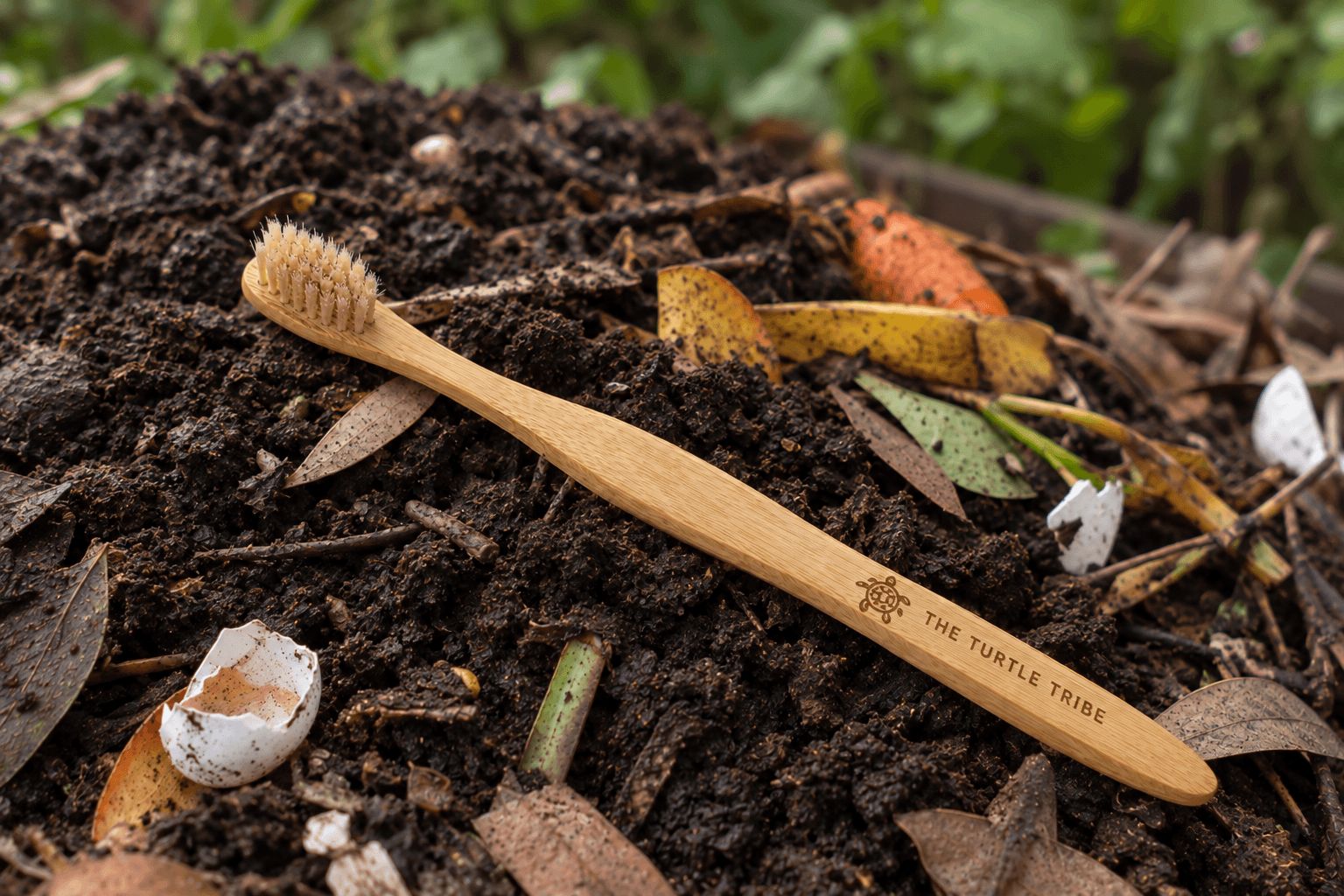
This is where a bamboo toothbrush differs substantially from a plastic toothbrush.
A conventional plastic toothbrush can persist in the environment for a very long time. If plastic escapes into waterways or the ocean, it doesn't simply biodegrade away. Over time it can fragment into progressively smaller pieces, including microplastics.
How quickly bamboo breaks down depends heavily on the conditions it ends up in. If you home compost, the bamboo handle can break down naturally over time. What you do with the bristles depends on what they're made from. Nylon bristles should be removed before composting the handle. Natural animal-hair bristles are biodegradable, although our natural-bristle toothbrushes also contain small metal staples that hold the bristle tufts in place.
Is a bamboo toothbrush completely plastic-free?
At The Turtle Tribe we sell both nylon and natural-bristle toothbrushes because they suit different people. Nylon gives you consistency, softness, colour options and a familiar brushing feel. Natural boar and horse-hair bristles remove plastic from the bristles as well, but they feel different and come with their own trade-offs.
That's a much bigger subject, particularly with all the recent discussion around nylon, microplastics and natural bristles, so I deal with it separately in Natural vs Nylon Toothbrush Bristles: What's the Difference - and Should You Worry About Microplastics?
The important point here is that even a bamboo toothbrush with nylon bristles still replaces the large plastic handle found on a conventional toothbrush.
Are there any downsides to bamboo?
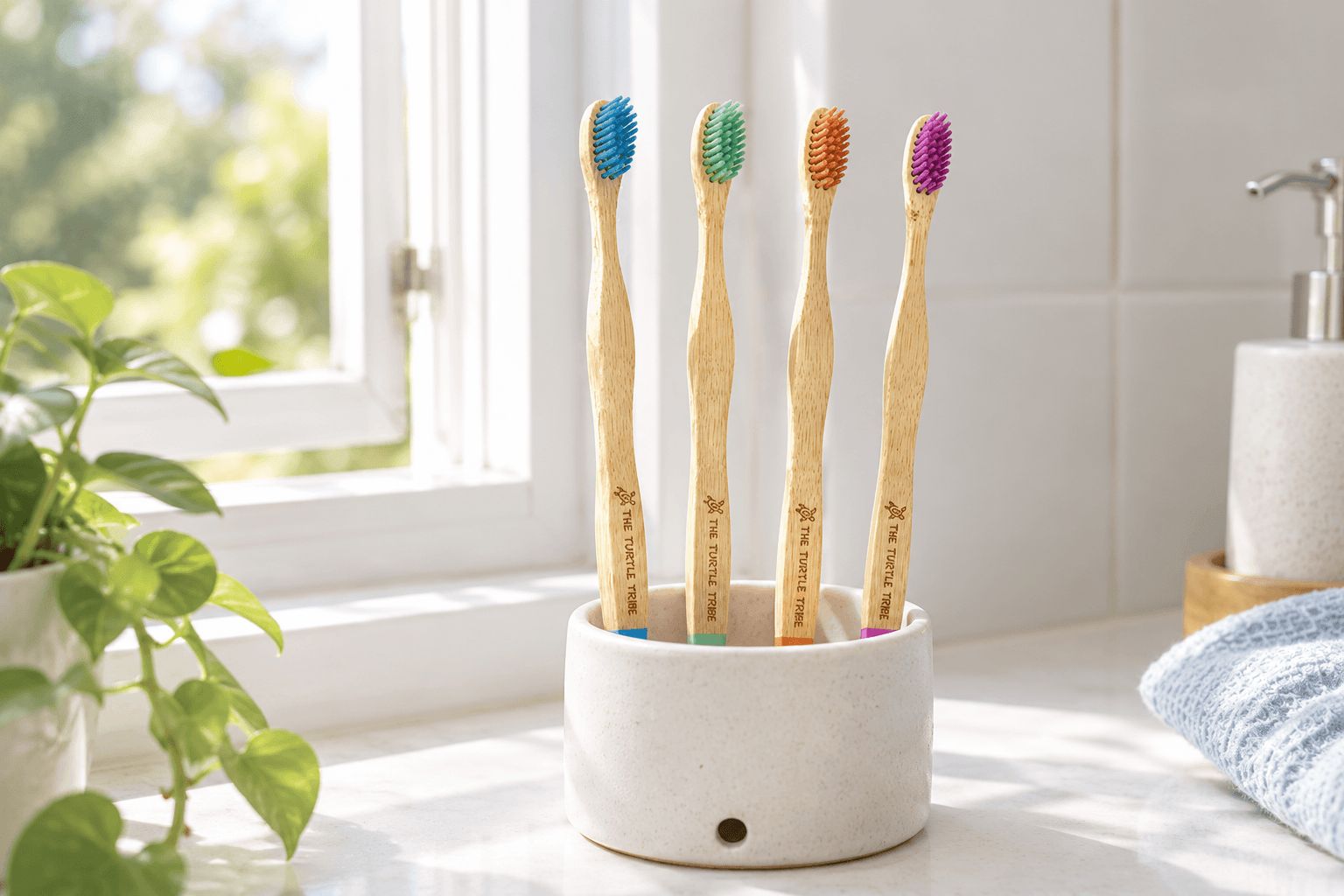
Plastic is very forgiving. You can leave a plastic toothbrush standing in water in the bottom of a cup and the handle won't care much. Bamboo will.
If bamboo stays constantly damp it can discolour or develop mould. The solution is not difficult: rinse the toothbrush after use, shake off excess water and let it dry properly. If you store brushes upright in a cup, make sure water isn't pooling around the base of the handles.
What about plastic pollution?
Plastic is incredibly useful. Its strength and durability are exactly why it has become part of almost every area of modern life. The problem is when we use very durable plastic for products we only need for a short time.
A toothbrush handle is a good example. It only needs to do its job for a few months, but conventional plastic can remain in the environment far longer than that. Globally, billions of toothbrushes are discarded every year, which is one reason we started looking at toothbrushes in the first place. They're small individually, but almost everyone uses them, and we keep replacing them throughout our lives.
One bamboo toothbrush is obviously not going to solve plastic pollution. But replacing a piece of plastic you would otherwise use and throw away over and over again is still a worthwhile reduction.
So, is it worth swapping?
If you currently use a conventional plastic manual toothbrush, I think bamboo is one of the easier swaps you can make.
You don't need to learn how to brush differently. You don't need to accept poorer cleaning. You can still choose soft or medium bristles, different colours and different bristle materials.
The main change is simply that the large plastic handle has been replaced with bamboo.
For some people, that will be enough. Others will want to go further and remove plastic from the bristles too. That's where the nylon versus natural-bristle discussion becomes important.
Either way, I think the most useful way to look at bamboo toothbrushes is not as a perfect solution, but as a very simple way to use less plastic in something you already use every day.
Frequently asked questions
Are bamboo toothbrushes as effective as plastic toothbrushes?
Yes. Research comparing bamboo and conventional plastic toothbrushes has found comparable plaque reduction. Bristle quality, brushing technique, frequency and brushing time matter much more than handle material.
Why should I swap from plastic to bamboo?
The main reason is plastic reduction. A bamboo toothbrush replaces the large conventional plastic handle with a renewable plant material while still working like a normal manual toothbrush.
Is every bamboo toothbrush plastic-free?
It depends on the bristles. Bamboo toothbrushes are available with plastic and natural bristles, and each have pros and cons.
Is bamboo really better for the environment?
Lifecycle research has found bamboo manual toothbrushes have a lower overall environmental impact than conventional plastic manual toothbrushes. One five-year lifecycle study found the bamboo toothbrush used 97% less plastic than the conventional plastic manual toothbrush.
Can I compost a bamboo toothbrush?
The bamboo handle can be composted under suitable conditions. Nylon bristles should be removed first. Natural bristles are biodegradable, although small metal staples may remain.
Do bamboo toothbrushes go mouldy?
Not if you keep them dry, but they can if they stay wet. Rinse the brush after use, shake or tap off excess water and allow it to dry properly between uses.
Do I have to give up soft or coloured bristles if I switch to bamboo?
No. Bamboo toothbrushes can still use soft or medium bristles and different colours. The handle material doesn't determine the bristle options.
What about microplastics from nylon bristles?
That depends on the bristle material rather than the handle. Nylon is plastic; natural boar and horse hair are not. I cover the evidence and the trade-offs separately in our guide to natural versus nylon toothbrush bristles.
The Turtle Tribe was founded in 2018 by Ned Heaton, who was 11 at the time, after becoming concerned about plastic pollution and looking for simple ways people could use less plastic. Since then, we've supplied more than 550,000 bamboo toothbrushes as alternatives to conventional plastic-handled brushes.
One toothbrush swap isn't going to solve plastic pollution. But toothbrushes are something most of us use throughout our lives, which makes them a practical place to reduce unnecessary plastic.
Sources
- Fageeh HN et al. Plaque Removal and Gingival Bleeding Using Biodegradable Toothbrushes: Salvadora persica, Bamboo, and Nylon: A Comparative Study. Medical Science Monitor. 2024;30:e944469. doi:10.12659/MSM.944469
- Lyne A et al. A cradle-to-grave life cycle assessment of toothbrushes. British Dental Journal. 2020;229(5):303-309. doi:10.1038/s41415-020-1981-0